
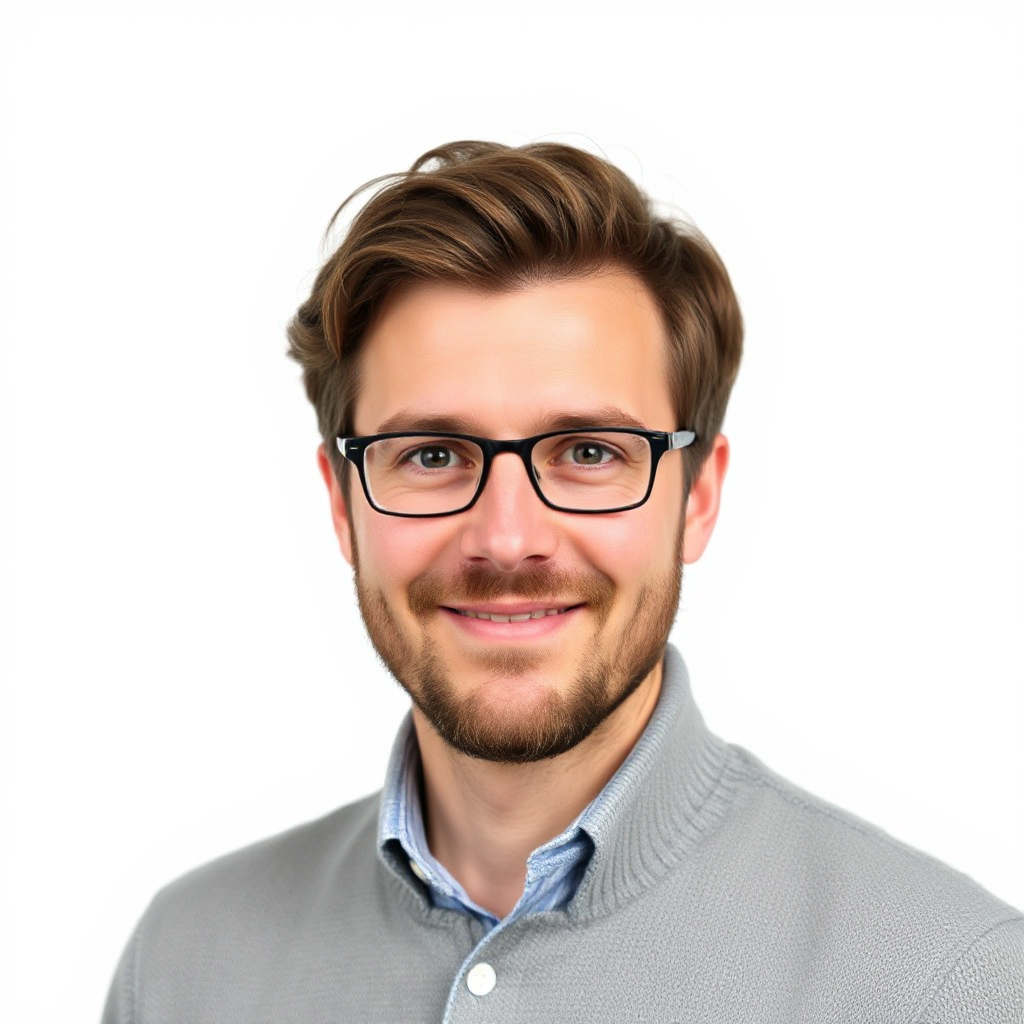
The late US vice-president Dick Cheney, who has died at the age of 84, was seen as one of the most significant holders of that office in the nation's history. While many vice-presidents were limited to minor or ceremonial functions, Cheney held huge power during the administration of George W Bush, so much so that he was frequently referred to as the "real president".
Bush objected to this portrayal and said the connection was more complex. He pointed out that Cheney was respectful, always referring to him in official appearances as the President, while he called him as Dick. Bush challenged even characterisations of their relationship as a partnership because it implied that they were peers. Despite these denials, Cheney found the laidback president pliable on a wide array of governmental choices.
A Period Following the Attacks
At the head of a contingent of neo-conservatives that encompassed defence secretary Donald Rumsfeld and deputy defence secretary Paul Wolfowitz, he strongly advocated the military intervention of Iraq in 2003 in reaction to the 9/11 attacks on New York and Washington. During of the 9/11 strike, Bush had been participating in a gathering at a school in Florida. While Bush traveled to a secure location in Nebraska, Cheney took charge, commanding the shooting down of any unidentified aircraft nearing the Capitol building.
Cheney claimed the attacks changed him, causing him to be determined on revenge. Along with other neo-cons, including Rumsfeld and Wolfowitz, he lobbied for a takeover of Afghanistan in an endeavor to capture Osama bin Laden. Cheney then pressed fiercely for the armed intervention of Iraq, though there was no evidence of Saddam Hussein being involved.
Debated Policies
He expressed no regrets about the military campaign, in which an estimated 100,000 Iraqis lost their lives, nor about the harsh treatment of detainees captured after 9/11. He stated to CNN in 2015 that the Iraq invasion effort, which was predicated on faulty information repeated by Cheney, was the proper course of action. "It represented the right thing to do back then. I was convinced then and I maintain that stance now."
Yet even then, there were dissenting voices at a high level about the botched execution of Iraq. One of the White House's own special envoys to the Middle East, General Anthony Zinni (2001-03), was dismissed from the role. "I witnessed, as a baseline," he wrote later "obvious failure, negligence, and unaccountability: potentially, falsehoods, unfitness, and corruption."
Additional Factors
Cheney was not completely accountable for the Iraq military action. Before 9/11, Wolfowitz had pushed for such action. He had drafted a document setting out scenarios in which national priorities might be threatened (including "availability of vital raw materials, primarily Persian Gulf oil"). Wolfowitz had argued that "the US should be prepared to operate alone when cooperative measures cannot be orchestrated," explicitly citing defense operations against Iraq.
Bush too had assumed the presidency somewhat determined on executing what his parent had notably declined to do in 1991; overthrow Saddam. After he had been dismissed by the administration, the treasury secretary Paul O'Neill recounted how, at the first meeting of the National Security Council in January 2001, Bush had declared his plan of reducing America's participation in the Israeli-Palestinian conflict and suggested military action against Iraq.
Bush held a individual resentment against Saddam, thinking he had been behind a scheme to murder his predecessor, President George HW Bush, on a trip to Kuwait in 1993. He additionally objected to that one of the most prominent accommodations in Baghdad had a ground design with a likeness of his predecessor's visage that each person had to tread upon.
Interrogation Methods
However it was Cheney who was among the most outspoken supporting invading Iraq, repeatedly citing information documents that were whether weak or completely misleading. He backed what the Bush government euphemistically referred to as "enhanced interrogation", the use of simulated drowning and physical pressure.
Addressing a Senate document in 2014 that concluded that no valuable data had been obtained through the interrogation methods, Cheney dismissed the conclusions as "full of crap". He stated to Fox News: "We requested [the CIA] to establish protocols and put in place initiatives to catch the individuals who took the lives of 3,000 of us on 9/11 and guarantee it was not repeated. That's exactly what they did and they deserve a lot of credit."
External Perception
Cheney reveled in nicknames imposed on him by opponents such as Darth Vader and the dark figure, and by the notion that he was a shadow power manipulating Bush. In the journalist's 2013 book about the pair, Days of Fire: Bush and Cheney in the White House, Cheney is cited as commenting: "Is it me who is the sinister strategist in the shadows that remains unseen leave his hole? It's a advantageous way to function, in fact."
Commercial Ties
Dispute over his commercial relationships pursued him during his tenure as VP. Although he had minimal expertise in commerce but good contacts in security, notably in Saudi Arabia, he was asked to become part of Halliburton, one of the world's biggest petroleum corporations, in 1995 as chair and top executive.
In 2000 he assumed the role of Bush's VP candidate for the White House. Contentiously, during the conflict in Iraq, Halliburton was granted US agreements totaling multiple billions.
It greatly increased his wealth. His yearly compensation during his time at the corporation grew from his quarter-million dollars when he was defence secretary to over four million. When he left in 2000 he had a package totaling in excess of $20m|twenty

